Monthly Archives: November 2012
Suggestion for Transcribing Dothraki in Cyrillic
Note: This post originally appeared (in a modified form) at my old blog. As I’m no longer using that blog anymore, I decided to port the post over here (though the original post still exists).
As a conlanger and orthography enthusiast, one of the things I like doing is figuring out how to write a language in a different script. In the past, I’ve created dozens of romanization systems for my conlangs (even alternate versions depending on whether Unicode is available), alternate orthographies for some of my languages using the scripts of other languages of mine, even alternate spelling systems for English. And all just for fun! This is the strange life I lead.
Recently I came across a couple sites that have been translating the English closed captioning for episodes of Game of Thrones that have aired so far into other languages. One of these sites is translating the English into Russian. From what I’ve seen, though, the Dothraki remains untransliterated (i.e. it remains written in Roman characters). Where’s the fun in that?
Here, then, is a suggestion for writing Dothraki using the Cyrillic alphabet. My Russian isn’t great, so take this with a grain of salt (and feel free to amend it or comment on it), but I think it works.
I should note that my primary experience with Cyrillic is in Russian, which I studied in college. I’m not very familiar with other Cyrillic systems (cyrillization systems? cyrillicization systems…?) used for the various languages of Eurasia, or how accessible a given character choice will be to the largest number of viewers. Since the original site I found was focusing on Russian, though, I’ve tended to go with what a Russian speaker would recognize over what a Mongolian, Serbian, Ukrainian, etc. speaker would recognize.
With those caveats out of the way, the table is presented below:
| Romanization | Cyrillic | Comment (If Any) |
|---|---|---|
| a | а | — |
| b | б | — |
| ch | ч | I actually like this better than using a digraph (which is necessary in English without resorting to accents or alien assignments). |
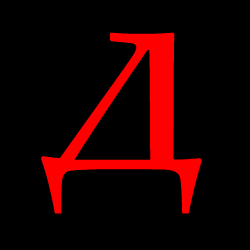
| d | д | — |
| e | э | I think this is the best solution to avoid the onglide of Russian “е”. |
| f | ф | — |
| g | г | Always hard; never pronounced like English “h”. |
| h | х | See comment on “kh”. See alternative below. |
| i | и | — |
| j | дж | Funny: English and Russian are opposites here (cf. “ch”). See alternative below. |
| k | к | — |
| kh | х | I had two choices, really: Have “g” and “h” spelled with the same letter, or “h” and “kh”. I went with the latter, since “h” is closer to “kh” in sound, and pronouncing a word with “kh” with “h” (or vice versa) will be far less confusing than pronouncing a word with “g” with “h” (or vice versa). See alternative below. |
| l | л | — |
| m | м | — |
| n | н | — |
| o | о | — |
| p | п | — |
| q | к | I have no clever idea for this sound. I figure “к” is closest, so might as well use it (since we already have one confusion built in with “h” and “kh”). See alternative below. |
| r | р | — |
| s | с | — |
| sh | ш | Sound is actually closer to “щ”, but “ш” is a simpler character. |
| t | т | — |
| th | ц | Can I get away with this? The sounds are nothing alike, but the place of articulation is close! If not, it’d just have to be “т”, I guess (unless anyone still remembers “ѳ”). |
| v | в | — |
| w | ў | In all positions. |
| y | й | In all positions. |
| z | з | — |
| zh | ж | — |
| ‘ | ‘ | Or just leave it out entirely; it’s not important. |
And here are some common words:
- khal ~ хaл
- khaleesi ~ хaлээси
- arakh ~ aрaх
- vezhven ~ вэжвэн
- athchomar ~ aцчомaр
- jahak ~ джaхaк
- yeroon ~ йэроон
Based on some comments made on the original LiveJournal post by Owen Blacker, I’ve got some ideas for possible revisions to the system above:
- Apparently Serbian uses “ђ” for Dothraki j (or something very close to it), so that might be a nice alternative to the digraph (though I’m not sure if it comes standard on a Russian keyboard).
- Searching for a possible alternative for Dothraki q led me to one interesting solution. Some languages use “қ” for q, but apparently some of the Iranian languages have replaced that with the digraph “къ”, which I think is perfect! The little “b” character (ъ) is the “hard sign” in Russian’s orthography. It has a very specific use there, but since it doesn’t in Dothraki—and since it would be immediately recognizable to Russian speakers—the usual “к” glyph would be augmented to “къ” for q, making it seem like q is the “hard” version of k—and that’s not too far off!
- Cyrillic “һ” is a possibility for h (leaving “х” free to be kh), but I’m not sure how common it is. Another possibility presents itself, though. Since “г” is commonly used for [h] in Russian, it could become the new letter for h, and then “гъ” (or “hard г”) could become the way to write g. Kind of odd to think of writing g as a digraph, but it works!
Unfortunately, I’ve still found no satisfactory solution for th. It’s a tricky sound to handle in Cyrillic, because it used to exist in a lot of Slavic languages, but was eventually replaced by either [t] or [f]—with the character itself taking over to spell those new sounds. However, if we continue to spell it with “ц”, there’s an amusing little in joke. In Russian (and many other Slavic languages), this character is used for the affricate [ts]. In the episode where Irri is teaching Dany to speak Dothraki properly, Dany practices with the word athjahakar. When she gets it wrong, though, she pronounces it atsjakar. Thus, the Russian character to spell it—if pronounced as it would be in Russian—would lead one to mispronounce the beginning part of that word in the exact same way Dany mispronounces it. Ha!
Well, thanks for indulging me yet again. I hope your weekend has been spent in safety, and far away from the madness surrounding shopping centers around this time of year. Fonas chek!
Happy Thanksgiving
To those in America, Happy Thanksgiving! To those in Canada, Happy Thanksgiving about a month ago! To those elsewhere, happy day!
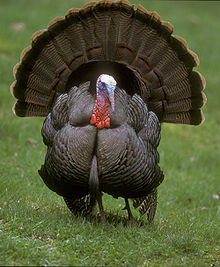
Something that may have been asked before but which I didn’t address was a Dothraki word for turkey. It seems to me that there would be no turkeys in Essos, if it was modeled after Eurasia (it seems like Westeros was modeled after North America, and Essos Eurasia, or something close to that), which would mean there would be no native word for turkey. If it were to be borrowed, it’d probably be borrowed from Westeros through one of the languages of the western coast of Essos. And since the Common Tongue is spoken in Westeros, it’d probably come out as “turkey” (or something based on it).
Thanks to Abe Simpson of The Simpsons, though, we do have a handy compound for turkey we can calque: a walking bird. A Dothraki calque for that would be zir ifay. In fact, we can put that together and get zirifay. That works pretty nicely.
So, to one and all, allow me to say: Asshekhi Zirifayi Vezhvena! Stay safe, and may the Cowboys lose (after Miles Austin gets two touchdowns. I need this win in fantasy)!